
Overnight Care vs. 24-Hour Home Care: Which Is Right for Your Loved One?
If You’re Wondering Whether Overnight Care Is Enough, You’re Not Alone.
One of the most common questions families ask is:
“Does my loved one need overnight care, or is it time for 24-hour home care?”
The answer depends on much more than whether someone needs help during the night.
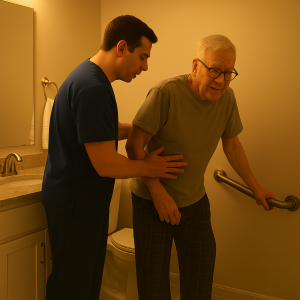
Many older adults simply need assistance getting safely to the bathroom once or twice overnight. Others may have advanced dementia, frequent falls, nighttime wandering, or complex care needs that require continuous supervision throughout the day and night.
Choosing the appropriate level of care can make a significant difference in your loved one’s safety, independence, comfort, and overall quality of life.
At SYNERGY HomeCare of Tucson, we help families throughout Tucson, Oro Valley, Marana, Green Valley, Sahuarita, Catalina, SaddleBrooke, and surrounding communities determine the right level of in-home care for their unique situation. Caregivers for seniors are trained to provide around-the-clock home care and overnight care.
This guide explains:
- What overnight senior care includes
- What 24-hour home care includes
- The differences between the two
- When each option is appropriate
- Cost considerations
- Common misconceptions
- How to decide which level of care is best
- When to hire an overnight caregiver
- When to transition to 24-hour care
What Is Overnight Senior Home Care?
Overnight home care in Tucson provides assistance and supervision during nighttime hours while allowing seniors to remain safely in their own homes.
Typically, an overnight caregiver arrives in the evening and remains until the following morning, helping with bedtime routines, overnight safety, and morning activities.
Depending on the care plan, overnight care may involve either:
Sleeping Overnight Care
With sleeping overnight care, the caregiver remains in the home overnight and may sleep during designated hours while remaining available if assistance is needed.
This option often works well for seniors who:
- Wake infrequently during the night
- Need occasional bathroom assistance
- Feel anxious being home alone overnight
- Require reassurance after hospitalization
- Need medication reminders
- Benefit from having someone nearby in case of an emergency
Awake Overnight Care
An awake overnight caregiver remains alert throughout the entire shift.
This level of care is appropriate when a senior requires ongoing observation or frequent assistance during the night.
Awake overnight elderly care is commonly recommended for individuals experiencing:
- Dementia-related wandering
- Multiple nighttime awakenings
- High fall risk
- Restlessness
- Confusion
- Incontinence requiring frequent assistance
- Oxygen monitoring
- Hospice support
- Recovery after surgery
For many families, awake overnight senior care provides peace of mind while delaying—or even preventing—the need for full 24-hour care.
What Is 24-Hour Home Care?
Unlike overnight care, 24-hour home care provides continuous supervision around the clock.
Rather than one caregiver remaining overnight, caregivers work in rotating shifts to ensure someone is awake, alert, and available 24 hours a day.
This provides continuous assistance with:
- Personal care
- Bathing
- Dressing
- Meal preparation
- Medication reminders
- Mobility assistance
- Fall prevention
- Overnight supervision
- Cognitive support
- Companionship
- Transportation
- Household assistance
- Safety monitoring
Because caregivers rotate shifts, your loved one always has someone who is rested, attentive, and ready to respond immediately. Caregivers communicate important information at the time of scheduled shift changes to provide for continuity of care. Our care management system retains care notes from each visit, giving caregivers, office staff, and family members the ability to review notes from every shift.

Why Families Often Start with Overnight Senior Home Care in Tucson
Many families assume they need 24-hour care when nighttime assistance first becomes necessary.
In reality, in-home overnight care is often the ideal first step.
For example:
A senior recovering from hip replacement surgery may only need help getting safely to the bathroom during the night for a few weeks.
Someone experiencing mild Parkinson’s symptoms may benefit from overnight assistance while continuing to remain independent during the day.
An older adult who recently lost a spouse may simply feel safer knowing someone is present overnight. Families often seek overnight care for seniors living alone.
In these situations, having an overnight caregiver offers an excellent balance between safety, independence, and affordability. Nighttime care for elderly parents gives families peace of mind.
When Overnight Care May No Longer Be Enough
As medical conditions progress, care needs often increase gradually rather than all at once.
Families frequently notice changes such as:
- More frequent falls
- Increased nighttime wandering
- Difficulty walking safely
- More confusion after sunset
- Sleeping during the day and staying awake all night
- Increased family caregiver fatigue
- More assistance needed throughout the day
- Difficulty preparing meals
- Problems taking medications
- Forgetting to eat or drink
- Greater risk of leaving the home unattended
These changes may indicate that continuous 24-hour home care would provide a safer environment. 24/7 home care in Tucson is often the more appropriate choice.
Overnight Senior Care vs. 24-Hour Home Care: Side-by-Side Comparison
Overnight Home Care |
24-Hour Home Care |
Care during nighttime hours |
Care provided 24 hours a day |
One overnight caregiver |
Multiple rotating caregivers |
May be sleeping or awake |
Caregiver always awake |
Ideal for occasional nighttime assistance |
Best for continuous supervision |
Lower overall cost |
Higher level of support |
Helps after surgery or illness |
Appropriate for advanced medical or cognitive decline |
Good for mild nighttime needs |
Best for extensive daily and nighttime assistance |
Can delay transition to full-time care |
Provides maximum safety at home |
Which Option Is Safer?
There isn’t one universal answer.
The safest option depends entirely on your loved one’s individual needs.
Generally speaking:
Overnight Senior Care Is Often Appropriate When:
✔ They need occasional nighttime assistance.
✔ They remain fairly independent during the day.
✔ They do not wander.
✔ They have minimal fall risk.
✔ They can usually return to sleep after receiving help.
24-Hour Home Care Is Often Appropriate When:
✔ Someone must always be present.
✔ Falls are becoming frequent.
✔ Dementia is progressing.
✔ Wandering has become a concern.
✔ Family caregivers are exhausted.
✔ Assistance is needed throughout both day and night.
✔ Safety cannot be maintained while alone.
Why Choosing the Right Level of Care Matters
Selecting too little care can increase the risk of falls, medication errors, wandering, hospitalization, and caregiver burnout.
Choosing more care than necessary may increase costs without improving quality of life.
That’s why a professional in-home assessment is so valuable.
At SYNERGY HomeCare of Tucson, we take the time to understand your loved one’s physical abilities, cognitive health, daily routines, medical conditions, and family goals before recommending a personalized care plan. Our goal is to provide the right amount of support—helping seniors remain safe, comfortable, and independent at home while giving families confidence and peace of mind. SYNERGY HomeCare is the trusted name for senior home care in Tucson, AZ.
Choosing the Right Level of Care Based on Your Loved One’s Needs
No two seniors require exactly the same level of support. A person recovering from surgery may only need temporary overnight assistance, while someone living with advanced Alzheimer’s disease may require continuous supervision.
The following examples illustrate when overnight senior care may be appropriate—and when 24-hour home care often becomes the safer choice.
Overnight Care vs. 24-Hour Home Care for Alzheimer’s Disease and Dementia
For families caring for someone with Alzheimer’s disease or another form of dementia, nighttime is often the most challenging part of the day. Overnight Alzheimer’s care and dementia care gives Tucson families peace of mind. SYNERGY HomeCare provides specializes in memory care support for clients and their families; our dementia and Alzheimer’s services are comprehensive. We participate in the Centers for Medicare and Medicaid Services GUIDE Program which provides free respite care for family caregivers.
Many individuals experience “sundowning,” a condition in which confusion, anxiety, agitation, and restlessness become more pronounced during the late afternoon and evening. Some seniors may wake repeatedly throughout the night, become disoriented, or attempt to leave the home without realizing the risks. A dementia or Alzheimer’s overnight caregiver can provide the needed safety supervision and support.
Overnight Care May Be Appropriate When:
- Sundowning occurs occasionally.
- Your loved one needs reassurance or redirection during the night.
- Bathroom assistance is needed once or twice overnight.
- Family caregivers primarily need uninterrupted sleep.
- Wandering is rare or easily redirected.
24-Hour Home Care May Be the Better Choice When:
- Wandering becomes frequent.
- The senior attempts to leave the home.
- Hallucinations or severe confusion occur.
- Falls become more common.
- Someone must remain awake and alert at all times.
- Assistance is needed throughout both the day and night.
Why This Matters
Even a single nighttime fall or wandering episode can have life-changing consequences. Continuous supervision can help reduce these risks while allowing many seniors to remain in the comfort and familiarity of home.
Overnight Care vs. 24-Hour Home Care for Parkinson’s Disease
SYNERGY HomeCare is the choice for Parkinson’s care in Tucson. Our caregivers receive specialized Parkinson’s training through the Parkinson’s Foundation. Parkinson’s disease often progresses gradually, and nighttime symptoms can become increasingly difficult to manage. As the disease progresses, Parkinson’s overnight care helps improve safety and quality of life.
Common challenges include:
- Difficulty turning in bed
- Muscle stiffness
- Tremors
- Assistance transferring to the bathroom
- Increased fall risk
- Medication timing
- Sleep disturbances
Overnight Care May Be Enough If:
- Assistance is primarily needed during bedtime and overnight.
- Mobility remains fairly good during the day.
- Falls are infrequent.
- Family members can provide daytime support.
Consider 24-Hour Home Care When:
- Walking becomes unsafe.
- Falls occur during the day and night.
- Transfers require hands-on assistance.
- Cognitive changes develop.
- Medication schedules become more complex.
- Daily activities require continuous support.
Overnight Care vs. 24-Hour Care Following a Hospital Stay
SYNERGY HomeCare of Tucson offers concierge care for returning home after a hospital or rehab stay. Returning home after hospitalization is often one of the highest-risk periods for older adults.
Many seniors are weaker than expected after:
- Hip replacement
- Knee replacement
- Cardiac procedures
- Stroke
- Pneumonia
- Serious infections
- Extended hospital stays
The first several weeks at home often involve increased fatigue, balance issues, and difficulty moving safely.
Overnight Care Can Help By:
- Assisting with bathroom trips
- Helping with repositioning
- Providing medication reminders
- Monitoring safety
- Reducing fall risk
- Giving family members the opportunity to rest
If recovery progresses as expected, overnight care after surgery may only be needed temporarily. However, if mobility or health does not improve, transitioning to 24-hour home care may provide additional safety and support.
24-Hour Care May Be Needed When:
- Hands-on-care is required throughout the day during recovery.
- The surgery or illness caused significant weakness.
- Loved ones are not available or are unable to assist with care.
- The risk of re-admission is high.

Stroke Recovery: Which Level of Care Is Right?
We understand that stroke recovery is different for every person. Our stroke recovery home care is flexible and meets the unique needs of each individual. Stroke survivors often face unique challenges that affect mobility, communication, and daily routines.
These may include:
- Weakness on one side of the body
- Difficulty walking
- Balance problems
- Increased fall risk
- Cognitive changes
- Difficulty swallowing
- Fatigue
Overnight Care Is Often Appropriate During Recovery If:
- Daytime therapy is ongoing.
- Assistance is primarily needed overnight.
- Mobility is improving.
- Family members provide daytime care.
24-Hour Care May Be Needed When:
- Transfers require two-person assistance.
- Frequent repositioning is necessary.
- Falls become likely.
- Cognitive impairment limits safety.
- Significant assistance is needed throughout the day.
Overnight Care vs. 24-Hour Care for Hospice Support
Families caring for a loved one receiving hospice or palliative care often experience significant emotional and physical demands. There is a misperception that hospice will provide daily care. The hospice company will typically only provide short nurse visits one day a week and bathing aide visits twice a week. SYNERGY HomeCare delivers the care that is needed outside of hospice.
Overnight Care can be Appropriate for Hospice
Having a hospice overnight caregiver allows family members to rest while ensuring someone is available to:
- Provide comfort
- Reposition the client
- Assist with toileting
- Offer companionship
- Monitor changes
- Notify family if concerns arise
24-Hour Care is Recommended for Hospice When:
- Loved ones are not available to provide care
- Hands-on assistance is required for toileting and transferring
- Safety is an ongoing concern
- The client is bedbound
- Constant comfort care is needed
Family Caregiver Burnout: The Warning Sign Families Often Overlook
One of the clearest indicators that additional care may be needed isn’t always the senior’s condition—it’s the caregiver’s. SYNERGY HomeCare provides respite care for family caregivers and we participate in the CMS GUIDE Program which provides free respite care.
Many spouses or adult children provide exceptional care for months or even years. However, interrupted sleep, constant worry, and around-the-clock responsibilities can take a serious toll. Eventually many families seek caregiver burnout help.
Signs of Caregiver Burnout Include:
- Chronic exhaustion
- Increased stress or anxiety
- Irritability
- Difficulty concentrating
- Neglecting personal health
- Feeling overwhelmed
- Social isolation
- Depression
Overnight care offers caregivers the opportunity to get a full night’s sleep, while 24-hour home care provides more comprehensive relief when caregiving demands extend throughout the day.
Supporting the family caregiver is an essential part of helping older adults remain safely at home.

A Simple Decision Guide: Which Type of Care Is Right?
Families often ask, “How do we know when it’s time to move from overnight care to 24-hour home care?” or “When is 24-hour home care needed?”
While every situation is unique, the following checklist can help guide the conversation.
Overnight Care May Be the Right Choice If Your Loved One:
✔ Needs help only during the night
✔ Is generally safe during the day
✔ Needs occasional bathroom assistance
✔ Has mild cognitive changes
✔ Wants reassurance overnight
✔ Is recovering from surgery or illness
✔ Lives alone but remains mostly independent
24-Hour Home Care May Be More Appropriate If Your Loved One:
✔ Cannot be left alone safely
✔ Requires assistance throughout the day
✔ Wanders or becomes disoriented
✔ Has frequent falls
✔ Needs help with most activities of daily living
✔ Requires continuous supervision
✔ Has advanced dementia
✔ Has complex mobility limitations
✔ Has exhausted family caregivers
If you’re unsure which level of care is appropriate, a professional in-home assessment can help identify current needs while planning for future changes.
Home Care: The Right Support as Needs Change
For many seniors, care evolves gradually.
A typical progression may look like this:
- A family member checks in occasionally.
- A professional caregiver provides assistance and companionship a few hours each week.
- Daytime home care every day of the week is added.
- Overnight care begins for safety and peace of mind.
- As needs increase, care transitions to 24-hour home care.
This step-by-step approach allows seniors to receive the support they need while preserving independence for as long as possible. Home care makes this transition possible because it is flexible: the amount of care can change as needs change. Families often struggle with decisions over whether to move into assisted living. With home care, the level of care may be increased (or decreased) as needed, with 24-hour notice. Senior living facilities do not offer this level of flexibility, and unfortunately, you or your loved one may be forced to move as needs change if the facility does not offer the level or type of care that is needed.
Understanding the Cost of Overnight Care vs. 24-Hour Home Care in Tucson
For many families, cost is one of the biggest factors when deciding between overnight care and 24-hour home care. While budget is important, it’s equally important to consider the level of care needed to keep your loved one safe.
The right choice isn’t always the least expensive option—it’s the one that provides the appropriate level of support while helping your loved one remain safely at home.
Several factors influence the overall cost of care, including:
- The number of hours of care needed
- Whether care is required only overnight or around the clock
- The level of assistance with personal care and mobility
- The presence of dementia or other cognitive conditions
- Whether an awake overnight caregiver is needed
- Specialized caregiver training
- Weekend or holiday coverage
In many situations, families begin with overnight care and transition to 24-hour home care only when additional supervision becomes necessary.
For a detailed breakdown of local pricing, read our guide: Cost of 24-Hour Home Care in Tucson (2026 Guide).
Overnight Care vs. Live-In Care vs. 24-Hour Home Care
These three services are often confused, but they are very different.
| Feature | Overnight Care | Live-In Care | 24-Hour Home Care |
| Coverage | Nighttime only | Continuous presence with scheduled sleep breaks | Continuous care, 24 hours a day |
| Caregiver Sleeps? | Sometimes (depending on care plan) | Yes | No |
| Caregiver Always Awake? | Only with awake overnight care | No | Yes |
| Number of Caregivers | Usually one | Usually one primary caregiver with relief | Multiple rotating caregivers |
| Best For | Nighttime assistance | Seniors needing ongoing help but able to provide uninterrupted sleep time | Seniors requiring continuous supervision |
| Highest Level of Safety | Moderate | Moderate | Highest |
Why This Difference Matters
Families often hear the term “live-in care” and assume it is the same as 24-hour care.
It isn’t.
A live-in caregiver requires adequate sleep, meal breaks, and personal time. If your loved one wakes repeatedly during the night, wanders, or needs frequent assistance, a live-in arrangement may no longer be appropriate.
With 24-hour home care, caregivers rotate shifts so that someone is awake, alert, and ready to respond at all times.
When Does It Make Sense to Transition from Overnight Care to 24-Hour Home Care?
The transition rarely happens quickly.
Instead, families usually notice small changes over weeks or months that gradually increase the amount of assistance needed.
Common signs include:
- Increased falls
- More assistance with bathing and dressing
- Frequent nighttime awakenings
- Progressive memory loss
- Difficulty taking medications correctly
- Wandering
- Increased incontinence
- Declining mobility
- Weight loss due to difficulty preparing meals
- Family caregiver exhaustion
Our 10 Signs It’s Time for 24-Hour Home Care in Tucson, AZ guide provides more detail on the issues families often encounter that lead to around-the-clock care at home.
Many families tell us they wish they had started additional care sooner, before a fall or medical emergency occurred.
Early intervention often helps older adults remain safely at home longer and reduces the stress placed on family caregivers.
Common Mistakes Families Make
Choosing care for a loved one can be emotional, and it’s easy to underestimate how quickly needs can change.
Here are some of the most common mistakes we see:
Waiting Until After a Crisis
Many families don’t begin looking for help until after a hospitalization, fall, or emergency room visit.
Starting care before a crisis often leads to a smoother transition and can help prevent avoidable injuries.
Assuming More Care Means Less Independence
Some families, particularly independent-minded seniors, worry that accepting additional help means giving up independence. We understand this – if someone has been independent for 70, 80, or 90 years, it can be hard to accept help. But the opposite is true.
Because in reality, appropriate care often allows seniors to remain in their own homes longer by providing just enough support to stay safe and active.
Underestimating Nighttime Risks
Many falls, wandering incidents, and medical emergencies occur during the night.
Families often focus on daytime needs while overlooking how much assistance may be required after bedtime.
Expecting Family Caregivers to Do Everything
Adult children and spouses frequently try to manage caregiving alone.
Over time, interrupted sleep, stress, and physical demands can lead to caregiver burnout.
Adding professional overnight or 24-hour care doesn’t replace the family’s role—it strengthens it. And it helps family caregivers return to their relation as spouse, daughter, son, etc.
Choosing Care Based on Price Alone
Cost is important, but so are:
- Safety
- Reliability
- Caregiver training
- Responsiveness
- Continuity of care
- Communication
- Ability to increase services as needs change
The least expensive option isn’t always the one that provides the greatest value or peace of mind.
Why Families in Tucson Choose a Local Home Care Agency
When comparing home care options, families often have a choice between hiring an independent caregiver, using a national referral service, or partnering with a local home care agency.
A locally owned agency like SYNERGY HomeCare of Tucson offers several advantages:
Personalized Care Plans
Every client receives a care plan tailored to their individual needs, preferences, and schedule. As those needs change, the care plan can be adjusted accordingly.
Experienced, Screened Caregivers
Professional caregivers are carefully selected, background-checked, and trained to provide compassionate assistance while maintaining each client’s dignity and independence.
Reliable Scheduling
If a caregiver is unavailable because of illness or an emergency, the agency can arrange qualified backup coverage, helping ensure continuity of care.
Ongoing Care Management
Care needs often evolve over time. Regular communication helps ensure services continue to meet changing needs and family expectations.
Specialized Experience
Whether a loved one is living with Alzheimer’s disease, Parkinson’s disease, recovering from a stroke, or returning home after a hospitalization, experienced caregivers can provide support appropriate to the individual’s condition.
Better Customer Service
You should never get a “We apologize for the longer than normal wait times” message when you call. Home care is a personal business. A live person should answer 24/7.
Peace of Mind for Families
Many adult children live outside the Tucson area. Knowing a trusted caregiver is present—and that there is an agency available to coordinate care and communicate with the family—can provide tremendous reassurance.
How We Help Families Determine the Right Level of Care
One of the questions we hear most often is:
“Can you tell us whether Mom (or Dad) needs overnight care or 24-hour care?”
The answer begins with listening.
During an in-home consultation, we evaluate factors such as:
- Mobility and balance
- Fall history
- Cognitive function
- Daily routines
- Medication schedules
- Personal care needs
- Home environment
- Family support
- Long-term goals
Rather than recommending more care than necessary, we focus on providing the right level of support—helping seniors remain safe while preserving as much independence as possible.
Can Overnight Care Delay the Need for Assisted Living?
In many cases, yes.
One of the biggest benefits of overnight home care is that it addresses the time of day when families often feel most vulnerable.
Knowing someone is available to assist with bathroom visits, monitor safety, provide reassurance, and respond quickly if help is needed can make it possible for many older adults to continue living at home longer.
As needs change, services can often be expanded gradually—from overnight care to daytime assistance, and eventually to 24-hour home care—without requiring a disruptive move to an assisted living community.
Why Home Care Is About More Than Tasks
Families often begin looking for care because of a practical concern:
- Mom keeps falling.
- Dad wanders at night.
- My spouse can’t safely get to the bathroom.
- We’re exhausted from staying awake every night.
But what they’re really seeking is something deeper:
Confidence.
Confidence that someone is there.
Confidence that help is available.
Confidence that their loved one is safe.
Confidence that they can finally get a full night’s sleep.
Professional home care isn’t simply about completing tasks—it’s about restoring peace of mind while helping older adults maintain dignity, comfort, and the familiarity of home.
Frequently Asked Questions About Overnight Care and 24-Hour Home Care
Does overnight care mean the caregiver stays awake all night?❯
Not necessarily.
There are two types of overnight care.
Sleeping overnight care allows the caregiver to sleep while remaining available if assistance is needed.
Awake overnight care means the caregiver remains awake throughout the shift to provide continuous supervision and immediate assistance.
The right option depends on your loved one’s needs.
What is the difference between overnight care and 24-hour home care?❯
Overnight care provides assistance during nighttime hours only.
Twenty-four-hour home care provides continuous care throughout both the day and night using rotating caregivers so that someone is always awake and available
When should someone move from overnight care to 24-hour care?❯
Families often transition when:
- Falls become more frequent.
- Wandering begins.
- Dementia progresses.
- Assistance is needed throughout the day.
- Family caregivers become overwhelmed.
- Safety can no longer be maintained when the senior is left alone.
Is overnight care enough for someone with dementia?❯
It depends on the stage of dementia.
Many individuals with mild or moderate dementia benefit from overnight care.
As dementia progresses and wandering, confusion, or safety concerns increase, 24-hour home care often becomes the safer option.
Which service is better after a hospital stay?❯
Many seniors recovering from surgery or hospitalization only need temporary overnight care for safety reasons.
If recovery is slower than expected or additional daytime assistance becomes necessary, 24-hour home care may provide additional support.
Does Medicare pay for overnight home care?❯
Traditional Medicare generally does not cover ongoing non-medical overnight home care. The CMS GUIDE respite program can provide some short-term support for family caregivers.
However, some long-term care insurance policies, veterans’ benefits, and other funding sources may help offset long-term care costs.
Families should review their individual coverage to determine available benefits.
Does long-term care insurance cover overnight care?❯
Many long-term care insurance policies help pay for qualified in-home care services.
Coverage varies by policy, including eligibility requirements, waiting periods, and daily benefit limits.
If you have long-term care insurance, your home care provider can often help you understand how your benefits may apply.
What is the difference between live-in care and 24-hour home care?❯
Live-in caregivers require uninterrupted sleep and scheduled breaks.
Twenty-four-hour home care uses rotating caregivers so someone is awake and actively providing care at all times.
Is overnight care less expensive than 24-hour care?❯
Yes.
Because overnight care covers fewer hours than continuous 24-hour care, the overall cost is typically lower.
The appropriate choice should be based on safety and care needs—not cost alone.
Can overnight care help prevent falls?❯
Yes.
Many falls occur during nighttime bathroom trips.
An overnight caregiver can assist with transfers, provide mobility support, turn on lights, clear walking paths, and respond immediately if assistance is needed.
Can overnight care delay assisted living?❯
In many cases, yes.
Adding overnight support often allows seniors to remain safely at home longer while giving family caregivers much-needed rest.
How quickly can overnight or 24-hour care begin?❯
Depending on the situation, care can often begin within a very short timeframe—sometimes the same day or within 24 hours for urgent needs.
A Tucson agency can explain availability and help coordinate a timely start to care.
Can couples receive overnight or 24-hour care?❯
Absolutely.
Many couples choose in-home care so they can continue living together while receiving assistance tailored to each person’s individual needs. This can be an economical option because the incremental cost of home care for a spouse or partner is minimal.
What conditions commonly require 24-hour home care?❯
Twenty-four-hour home care is frequently recommended for individuals living with:
- Alzheimer’s disease
- Other forms of dementia
- Parkinson’s disease
- Stroke recovery
- Advanced frailty
- Frequent falls
- Hospice care needs
- Mobility limitations
- Significant cognitive impairment
How do I know which type of care is right?❯
The best way is through a professional in-home assessment.
Evaluating mobility, cognition, fall risk, medications, daily routines, and family support helps determine whether overnight care or 24-hour home care will provide the safest and most appropriate level of assistance.
Quick Decision Guide
If your loved one… |
Consider… |
Needs help only at night |
Overnight Care |
Is safe during the day |
Overnight Care |
Bathroom assistance at night |
Overnight Care |
Is recovering from surgery |
Overnight Care |
Wanders due to dementia |
24-Hour Home Care |
Cannot safely be left alone |
24-Hour Home Care |
Needs assistance throughout the day |
24-Hour Home Care |
Has frequent falls |
24-Hour Home Care |
Requires continuous supervision |
24-Hour Home Care |
Why Families Throughout Tucson Trust SYNERGY HomeCare
Choosing home care is one of the most important decisions a family can make. Beyond the services provided, families want confidence that their loved one is in caring, capable hands.
At SYNERGY HomeCare of Tucson, we focus on providing compassionate, dependable care that is personalized to each client’s needs. Our caregivers are selected for their professionalism, empathy, and commitment to helping older adults remain safe and comfortable at home.
Families throughout Tucson, Oro Valley, Marana, Sahuarita, Green Valley, Catalina, SaddleBrooke, Vail, and surrounding communities rely on us because we offer:
- Personalized care plans tailored to each client
- Experienced and carefully screened caregivers
- Flexible scheduling, including overnight and 24-hour care
- Specialized support for Alzheimer’s disease, dementia, Parkinson’s disease, stroke recovery, hospice support, and hospital discharge
- Ongoing communication with families
- Responsive local leadership when needs change
- A commitment to preserving dignity, independence, and quality of life
Whether your loved one needs temporary overnight assistance or continuous 24-hour home care, our team is here to help you find the right solution.
Schedule a Complimentary In-Home Care Assessment
Every family’s situation is unique.
If you’re unsure whether overnight care or 24-hour home care is the better choice, we’re here to help.
During a complimentary in-home assessment, we’ll take the time to understand your loved one’s needs, answer your questions, and recommend a personalized care plan that promotes safety, independence, and peace of mind. Some companies charge for this meeting – we do not. It is completely free regardless of the choice you make.
Whether you’re planning ahead or facing an urgent situation, our experienced care team is ready to support you every step of the way.
Call SYNERGY HomeCare of Tucson today to learn how overnight care or 24-hour home care can help your loved one continue living safely and comfortably at home.
Contact us today at 520-327-2771 – 24 hours a day, 7 days a week – to learn how we can support you and your loved ones, ensuring comfort, dignity and peace. We are happy to answer any questions you have.
Call us at 520-327-2771 – 24 hours a day, 7 days a week. We are happy to answer any questions you have.